
English
Typical Cases
Customizable enterprise workflows and multi-format content publishing for process-driven applications...
PROJECT BACKGROUND OF REMOTE UNATTENDED
Power, heating, telecom and new-energy sites are often remote with dispersed assets and harsh conditions, making maintenance hard. With mature remote monitoring and higher equipment reliability, unattended operations are now feasible.
Enterprises need modern unattended safety systems for heating, gas, wind and PV networks—remote authorization, confirmation, tracking and visual control aligned with production safety requirements.
CASE OVERVIEW
Under the HSE management system, the remote unattended platform uses smart operation terminals and network communications to remotely control defect handling and two-ticket execution. It enables remote authorization, confirmation, control, route tracking, visualization and monitoring, together with handheld field execution and IoT identification. This simplifies on-site safety work, reduces staffing for measure execution, permit issuing, maintenance and restoration, and delivers computerized risk control, wireless control, job safety management, critical equipment measures, commissioning management and diagram-based visual monitoring—raising closed-loop HSE capability.
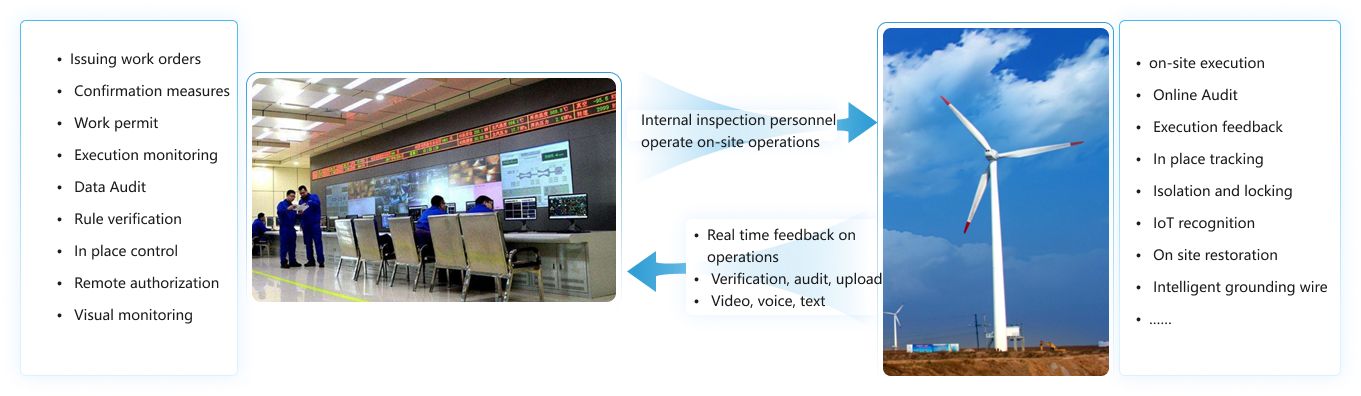
- Issue work permit
- Confirm measures
- Permit work
- Execution monitor
- Data audit
- Rule check
- On-site control
- Remote authorize
- Visual monitor...
Internal O&M staff operating on site
- Realtime operation feedback
- Validate, audit, upload
- Video, voice, text
- Field execution
- Online audit
- Execution feedback
- Presence tracking
- Isolation lockout
- IoT identify
- Field restore
- Smart ground wire
- ......
FUNCTIONAL ARCHITECTURE 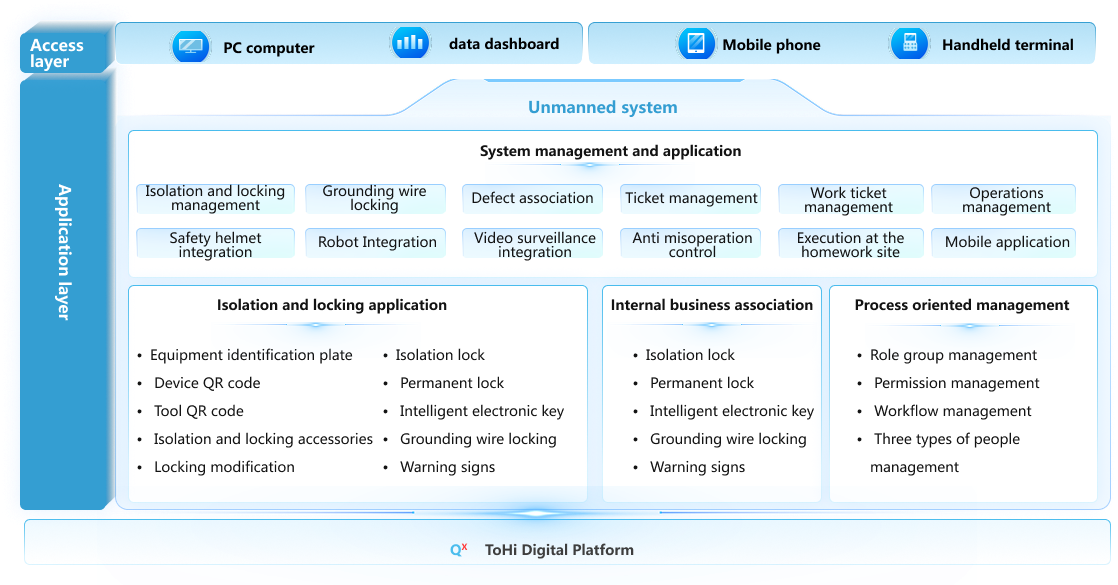
TYPICAL APPLICATIONS
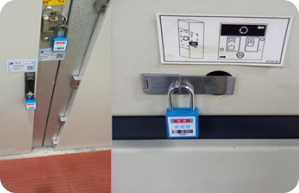
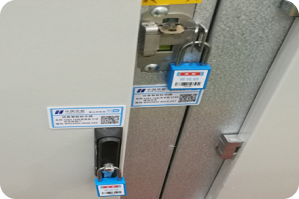
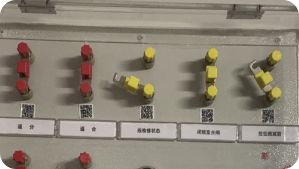
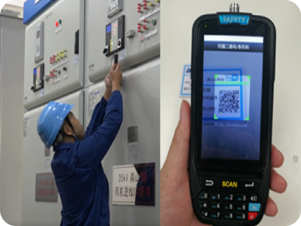
Chip nameplates
Attach nameplates with built-in NFC chips, printed KKS codes, equipment descriptions and QR codes. Chip IDs match equipment IDs and can be read by smart electronic keys and phones for logical validation with the program.Small-device QR tags
For small devices such as breakers and press-plates with limited space for nameplates, apply QR tags linked to KKS codes so they can be scanned by smart keys and handhelds.Remote work-permit measures
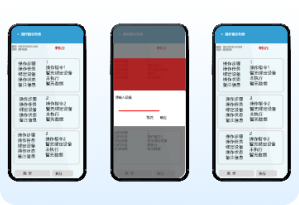
Using smart keys with nameplates, QR tags and lockout hardware, work-permit measures are executed with remote authorization and logic checks to ensure correctness under unattended conditions, prevent wrong bay/device operation, and improve permit safety control.Remote switching orders
Download switching orders to smart keys and, with nameplates, QR tags and locks, enforce step sequence during execution to prevent skipping or missing steps; confirm results and archive electronic signatures.IoT ground-wire lockout
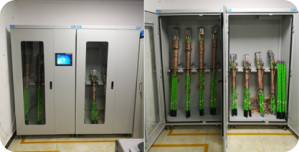
Apply IoT lockout to ground wires; unlock is authorized via two-ticket or the remote control center. The center monitors usage, integrates with two-ticket to prevent missing connect/remove, and warns on unreturned ground wires.Visual equipment status
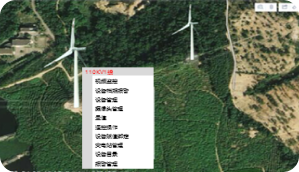
The remote control center collects field status data for visual monitoring of running, isolation and maintenance states, and links inventory, spares, defects, work orders, work permits, switching orders and equipment drawings.APPLICATION VALUE 




Cost & efficiency
Reduce on-site staffing and travel time, improve equipment reliability, and raise intelligent O&M capability
Safer control
Combine equipment nameplates with smart electronic keys to prevent measure mis-operation and strengthen safety control
Integrated maintenance
Integrate defects, work orders, work permits and switching orders on one smart operation terminal
Higher productivity
Use smart terminals for integrated maintenance and remote control to cut travel time and raise work efficiency
Visual smart control
Enable visual remote monitoring of field equipment and raise intelligent management for unattended new-energy sites
MORE CASES 

Huaneng Guizhou Clean Energy Nanshan Wind Farm
Unattended wind-farm job safety control
Based on the new-energy unattended control platform, combined with isolation lockout hardware, chip nameplates, equipment QR tags, smart electronic keys, IoT ground wires, smart helmets and video surveillance, the project delivers unattended wind-farm job safety control. Functions include defect management, work-order management, work-permit management, switching-order management, equipment status visualization, ground-wire logic lockout and remote on-site job monitoring. It can also connect field inspection robots and drones for automatic defect reporting from inspection results, further raising wind-farm job safety under unattended operation.
China Resources New Energy (Suizhou) Wind Co., Ltd.
On-site job safety monitoring
Based on the new-energy unattended control platform, combined with infrared sensing horns, mobile cameras and personnel location chips, the project enables remote monitoring of wind-farm field work. Maintenance contractors entering the farm are registered, and location tags are issued to on-site staff so GIS can track movement trails. Mobile cameras provide real-time visibility of repair work, while infrared horns give voice prompts to personnel climbing stairs for key safety notices. By integrating field software and hardware, the unattended system improves on-site job safety control.
Learn more about the solution for your business
Get a quote



Zhuhai ToHi Technology Co., Ltd.
+86-756-2137770
tohi@tohi.cn
Zhuhai Headquarters: 6th Floor, Taihe Business Center, 338 Ningxi Road, Xiangzhou District, Zhuhai
Beijing Office: 1206, Building 17, Jianwai SOHO West Area, Chaoyang District, Beijing
Guangdong-Macao Cooperation Zone: Cultural and Creative Industries, Rooms 509 and 510, 48 Tianyu Road, Hengqin
Vietnam Office: H2 Twin Towers, Ecological River Urban Area, Haiyangfang, Haiphong City, Vietnam
